
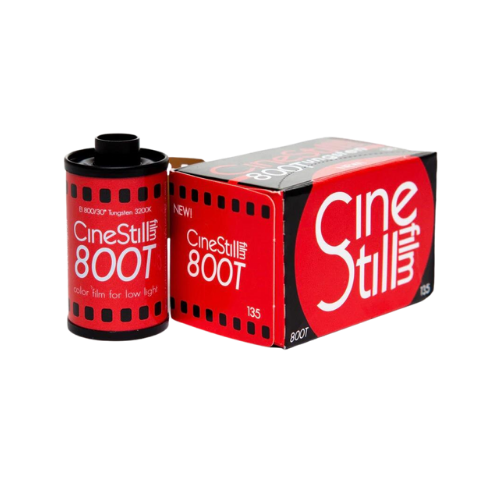
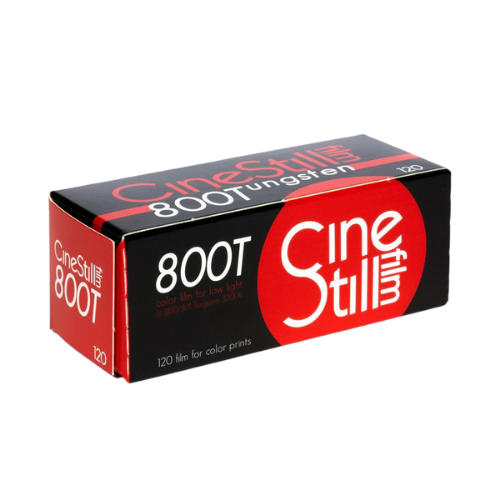
There are many polarising views found across the world of Cinestill 800T. "Either love it or hate it," just like Marmite sauce. Fun fact: research indicates that Marmite taste preference can largely be attributed to our genetic blueprint, which shows that each of us is born with a tendency to be either a "lover" or a "hater." So, which one are you?
Most comments I have heard over the years about Cinestill 800T were primarily about the halation. Halation is the reflection of bright points of light off the film base and pressure plate, causing a "glow" in the strong highlights on some images. The reason you see halation in Cinestill is mostly because it doesn't have the Remjet layer. The Remjet layer is a protective layer on the base of motion picture film that protects against light piping, scratches, static, and halation of highlights during exposure. When a point of light hits the film and is able to pass through it slightly and hit the back of your camera, the light will diffuse and then bounce back to the film, re-exposing it a second time. Cinestill films do not have the Remjet layer because it is incompatible with standard still film processing and will contaminate the chemicals and the film.
Some people love this film, and some people don't. Whether you like it or not, it shouldn't be the main focal point of the image. Instead, the feel, perspectives, and vibe are more important. To be honest, before Cinestill 800T existed, I couldn't find a way to capture the kind of retro-wave, 80s Synthwave style, but now I can! I personally love the extra glow around the neon lights, which you can find a lot in Hong Kong. It works perfectly to achieve the results I have in mind. Voilà!
If you can't find Cinestill 800T, then try out Kodak 500T, which is what Cinestill was before it was discontinued. Speaking of which, I walked past Showa Store in Hong Kong a couple of days ago, and they rolled out the Kodak VISION3 500T in 135 format. Go check it out! DD.